We need you to know about our Website Terms and our Privacy Policy. By accessing any part of the website you are indicating that you accept these. If you do not accept, please do not use the website.
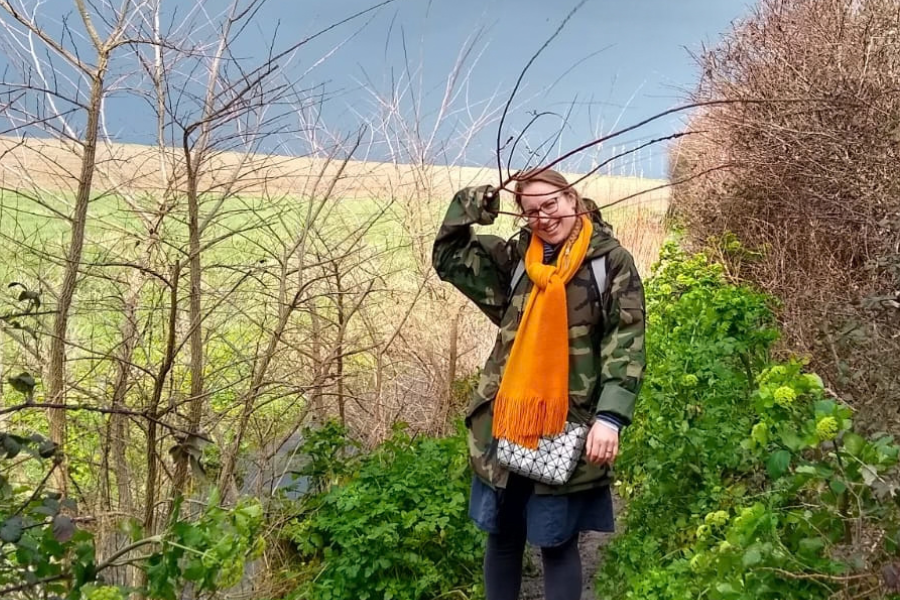
Genevieve in nature, before her life changed forever.
Genevieve’s alarm bells were ringing.
In 2023, she had a healthy lifestyle and enjoyable work as a community artist, but two unsettling symptoms warned her of how her life was about to change. A sharp headache behind her right eye, and vision changes like seeing strobing neon colours.
She never could have predicted that by 2025, she would have undergone four neurological surgeries, and nine different forms of rehab.
It was discovered that a plum-sized aneurysm was growing, pushing on her optical nerves, causing her sight and headache issues. If it continued to grow, or at any point ruptured, it could be fatal.
“It was incredibly shocking and disturbing, and it felt like being givena death sentence as I have had relatives die from ruptured brain aneurysms."
Surgery was her only option, and time was of the essence. The aneurysm continued to grow until it was the size of a tangerine; Her sight failure, fatigue, and headaches growing alongside it.
Unfortunately, the surgery required to save her life, also changed her life forever.
“I was told I had lessthan a 5% chance of a stroke, but I didn’t have much choice as continuing tolive with the aneurysm was risky.”
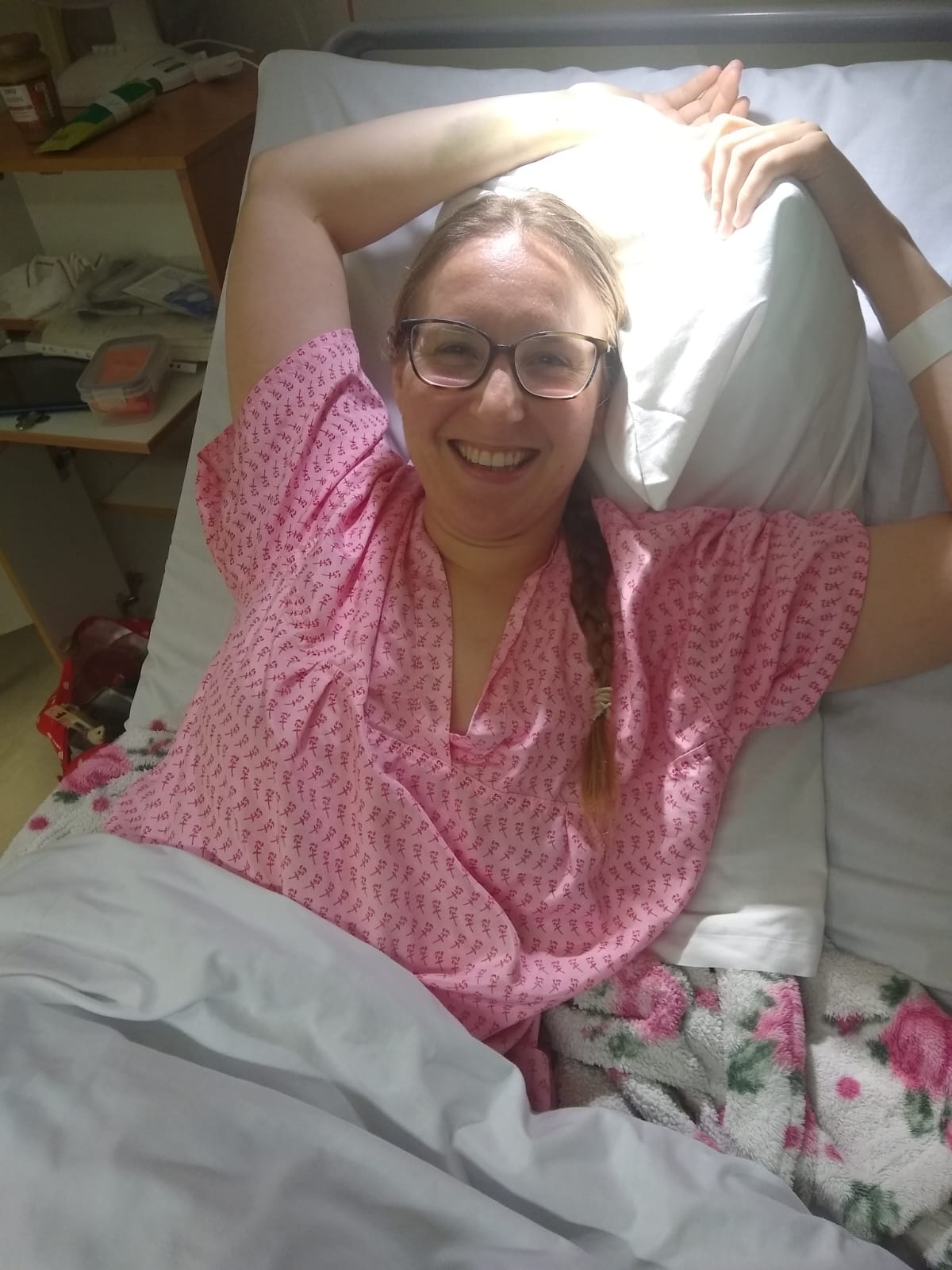
Genevieve just before her surgery.
Genevieve’s fears came true
A complication during the surgery lead to a stroke, followed by a brain bleed.
Professor Stuart Allan is one of the researchers powered by Brain Research UK supporters. He has been studying brain injuries for over 25 years and is internationally recognised for his work.
“A stroke happens when blood flow to the brain is markedly reduced and the cells are cut off from oxygen. Within minutes of this reduction in blood flow, parts of the brain are permanently damaged, leading to devastating outcomes, potentially fatal or long term disabilities,” explains Dr Allan.
The brain bleed in Genevieve’s head caused dangerous swelling and required the need for a craniectomy (a partial skull removal neurosurgery).
"When I came out of the surgery room, I had lost my ability to walk, my left hand stopped functioning, and my sight loss remained. It has affected every part of my life."
Genevieve after her crainectomy.
The importance of research
One major discovery Dr Allan and his colleagues uncovered was the importance of inflammation during stroke, and how it results in more cell death in the brain. It is possible, therefore, that drugs which reduce inflammation could limit brain damage in patients.
Thanks to Brain Research UK supporters, Professor Allan is now investigating a drug called anakinra, and how it might improve patient outcomes.
“Anakinra is already approved for clinical use, and if our research finds it is effective for treating stroke and other acute brain injuries, it could be rapidly repurposed for use.” said Professor Allan.
“Our hope is that fewer patients pass away, or need to go through difficult, uncertain recoveries like Genevieve. Thank you for helping make this research possible.”
Once Genevieve was released from the hospital ward, her long, and ongoing, recovery process began. She remained an in-patient for rehab for the next seven months, with a gruelling timetable of rehab everyday if she was to recover.
Genevieve's strength and coordination here greatly affected. While in physiotherapy rehab a helmet and handling belt were needed to keep her safe.
"My final neurosurgery was scheduled for six months later. When I’d left for rehab one year earlier on a stretcher, I told them that if I was ever coming back, I’d be coming back walking! It was a huge challenge for me, but with my husband’s support, and my quad stick, I made it back on the ward walking!
I now attend my local Headway regularly and have been able to continue developing my artistic practice around my impairments and creatively explore my neurological disability - www.genevieverudd.com."
How you affect change
New and novel treatments are crucial to improving patient outcomes. Research into reducing the likelihood of injury occurring and supporting the recovery process of patients is possible thanks to Brain Research UK supporters.
"I think the work of Brain Research UK is imperative as our central nervous system is what makes us human. I hope you can support the work of this charity to give future neurology patients a chance to live better, longer."